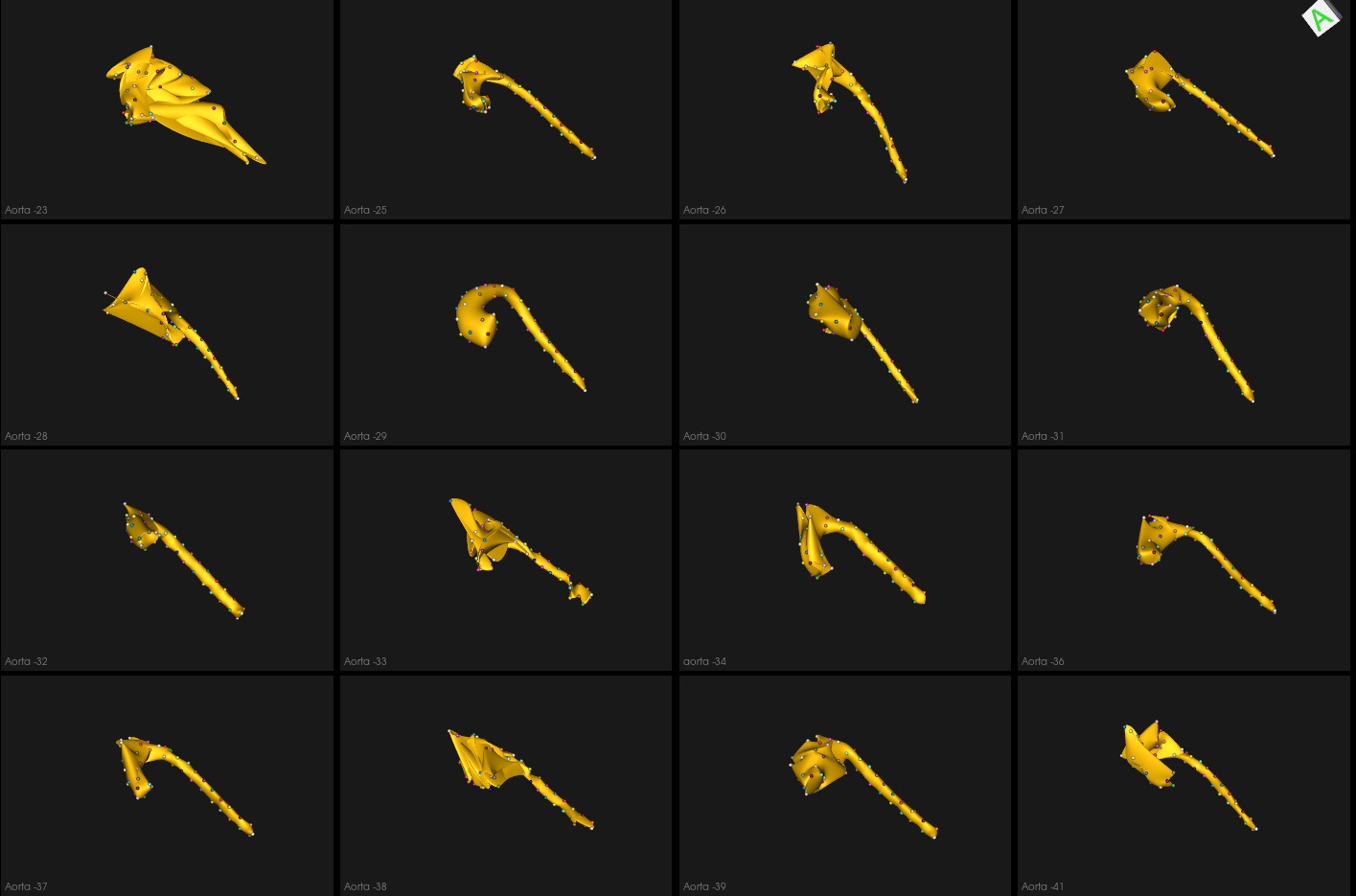
Hi, this looks like the optimization resulted in a poor correspondence. Usually this happens when the initialization phase fails to spread out properly. I would suggest increasing the number of iterations per split and potentially decreasing the initial relative weighting.
If you watch the initialization/optimization in ShapeWorks Studio, what you want want to see happen is that the particles should spread evenly across all of the shapes and maintain good correspondence. I would confirm that this is happening before moving on.

i tried with the solution you provided but there is still some poor shapes do you know how can we solve this problem

Ah, seeing the groomed shapes, this is going to be a particularly difficult dataset to model using particle based shape modeling. You have subjects with additional structures that are not present on the others. Still we should be able to get at least rough shapes. From your reconstructions, it seems the particles are still completely out of order.
If you watch the optimization process in Studio, do the particles spread out across the shapes sufficiently at the lower particle counts?
Do you think you could share this data, or a subset with me? amorris@sci.utah.edu
i sent you the data on the email you request
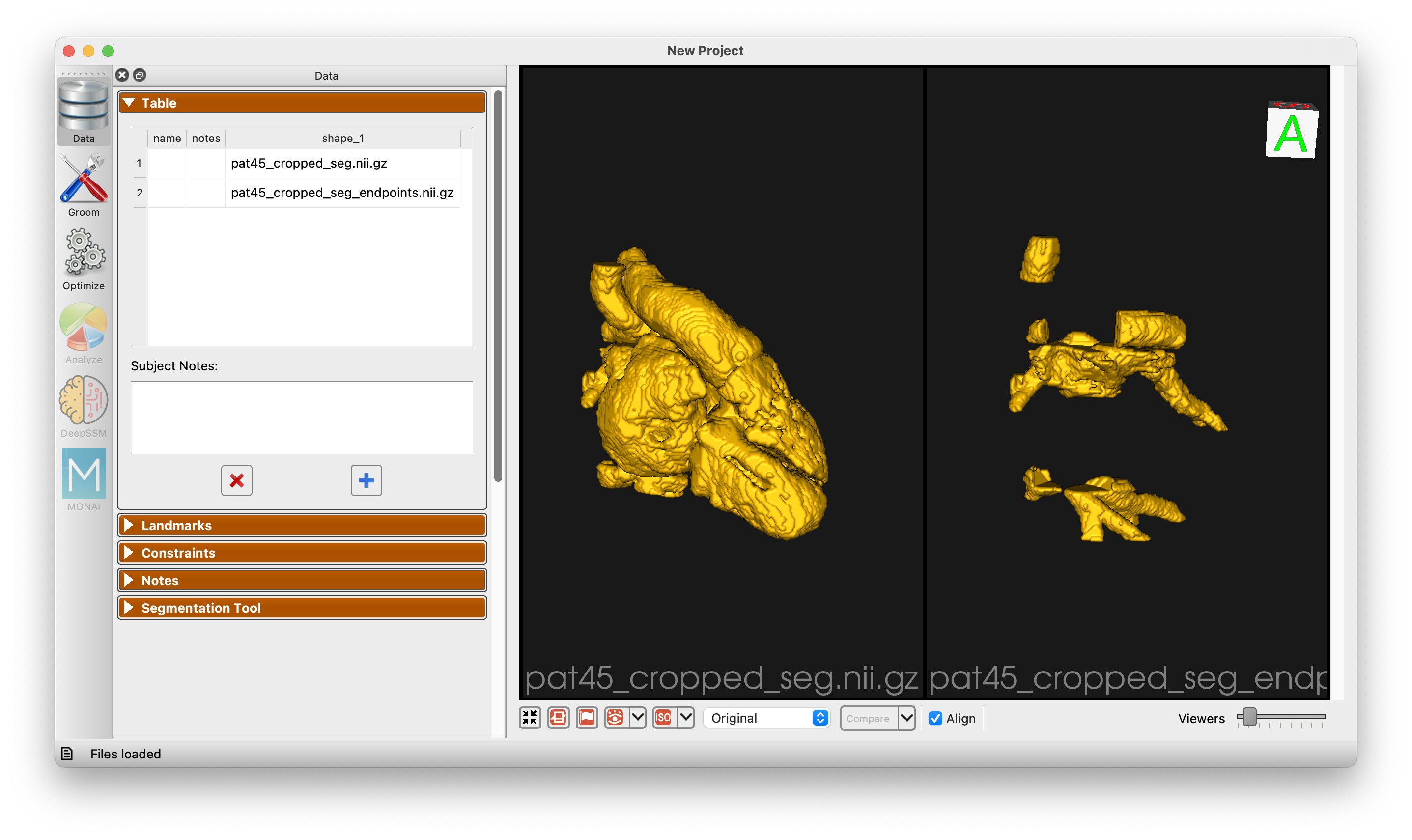
 New folder (3).zip
You can use this files
Here are some parameters that are at least a significant improvement over what you were showing above:

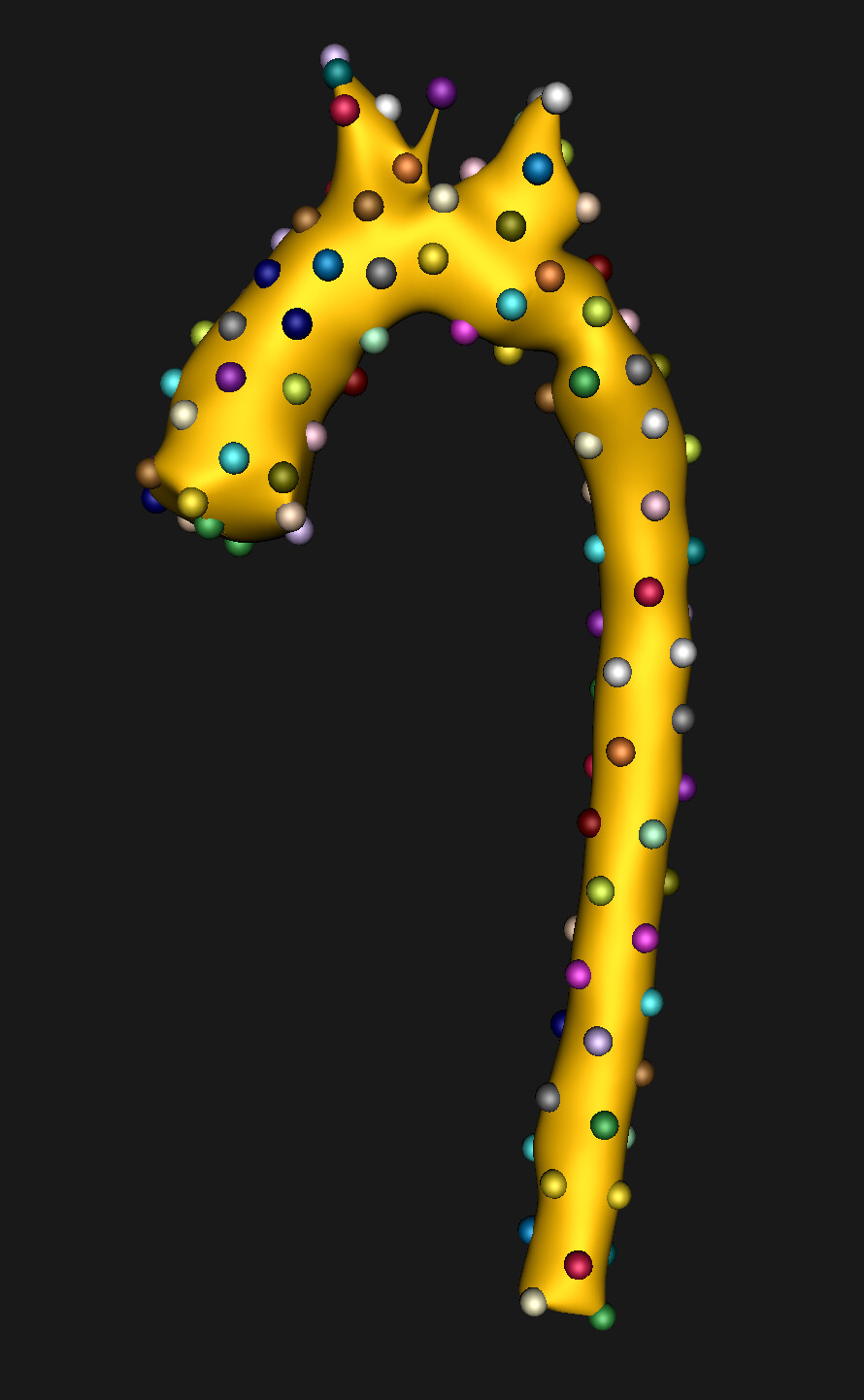
Mean shape:
Reconstructions:
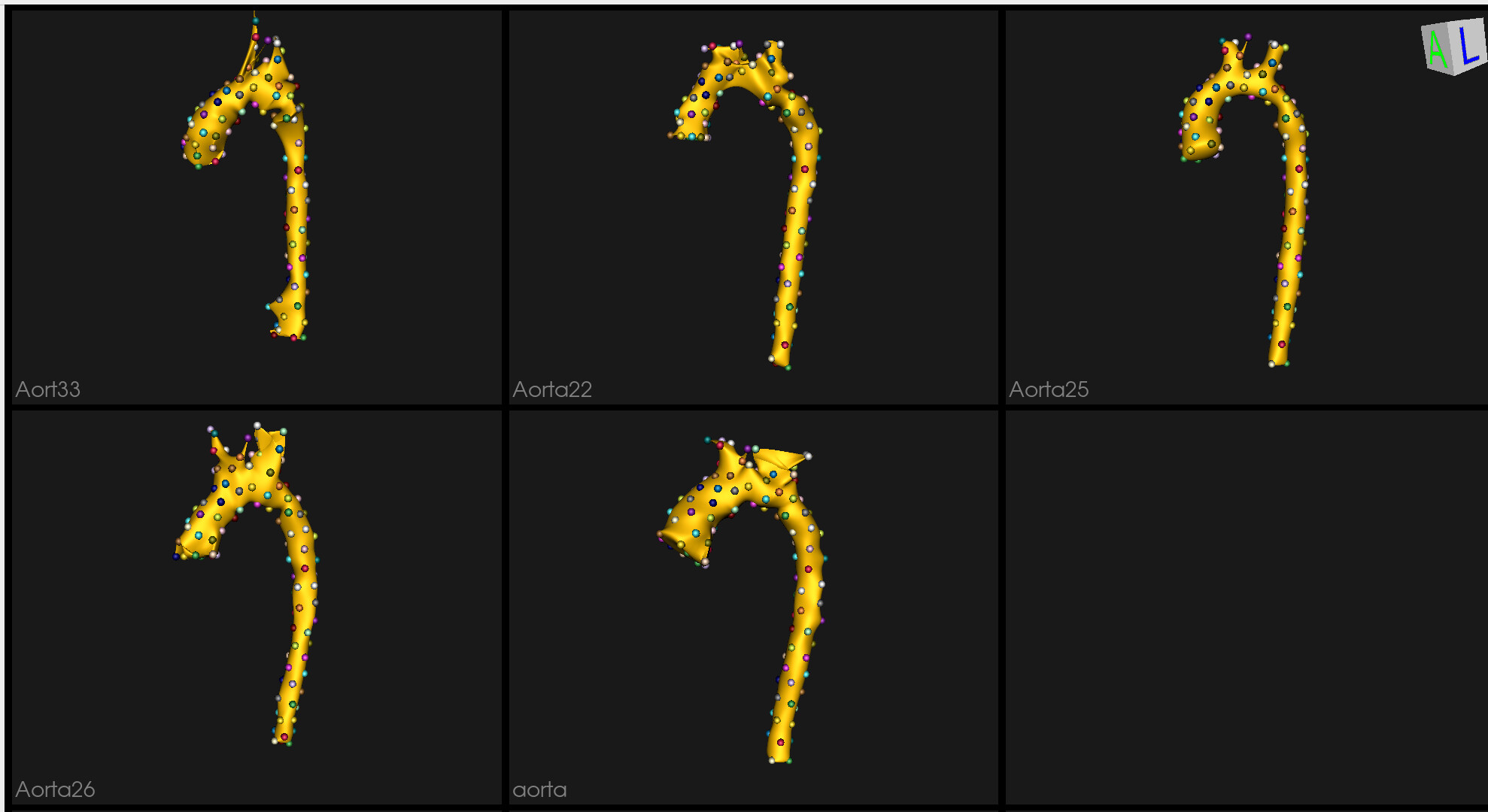
It’s not the best model, but at least a majority of the particles are in pretty good correspondences across the shapes. Given the differences in morphology, there are limitations to what particle based modeling can characterize.