Hi, I want to creating a MD-SSM for Subtalar Joint.
Currently, I would like to complete a preliminary experiment using ShapeWorks. I have 20 cases of talus and 20 cases of calcaneus from 10 individuals.
(All files are in STL format.)
The first problem I encountered was: how to import my STL model.
My method:
I created an excel like below(Name: “Talus&Calcaneus”):
I tried a different approach:
by creating a “New Project,” importing five STL models of the talus, saving it as a Spreadsheet (xlsx), and manually editing this Excel file ( add a column for shape_2 along with the file location for the calcaneus).
Finally, when I opened ShapeWorks, I was able to obtain an image that combined the calcaneus and talus.
Can you try saving as swproj (json) instead? I’m not sure what the xlsx zip stream problem is.
You can try setting the alignment to Iterative Closest Point, but this is generally for smaller misalignment. We don’t yet have tools in ShapeWorks to deal with very large misalignment. You might try aligning them manually in a different tool first.
The above question still exists. However, when I try saving the software in “SWPROJ” format, the “Error” no longer appears, although I’m not sure if this counts as a resolution.
Also, after obtaining the “OPTIMIZE” results, I attempted to export the generated MD-SSM model. I right-clicked the model and selected “Export Mesh”
Do you know how to prevent this error from occurring, or what I should do instead?
Unfortunately, there doesn’t appear to be a stack trace in your error message that would help us track it down. However, it sounds very much like this:
This should be fixed in the development version of ShapeWorks:
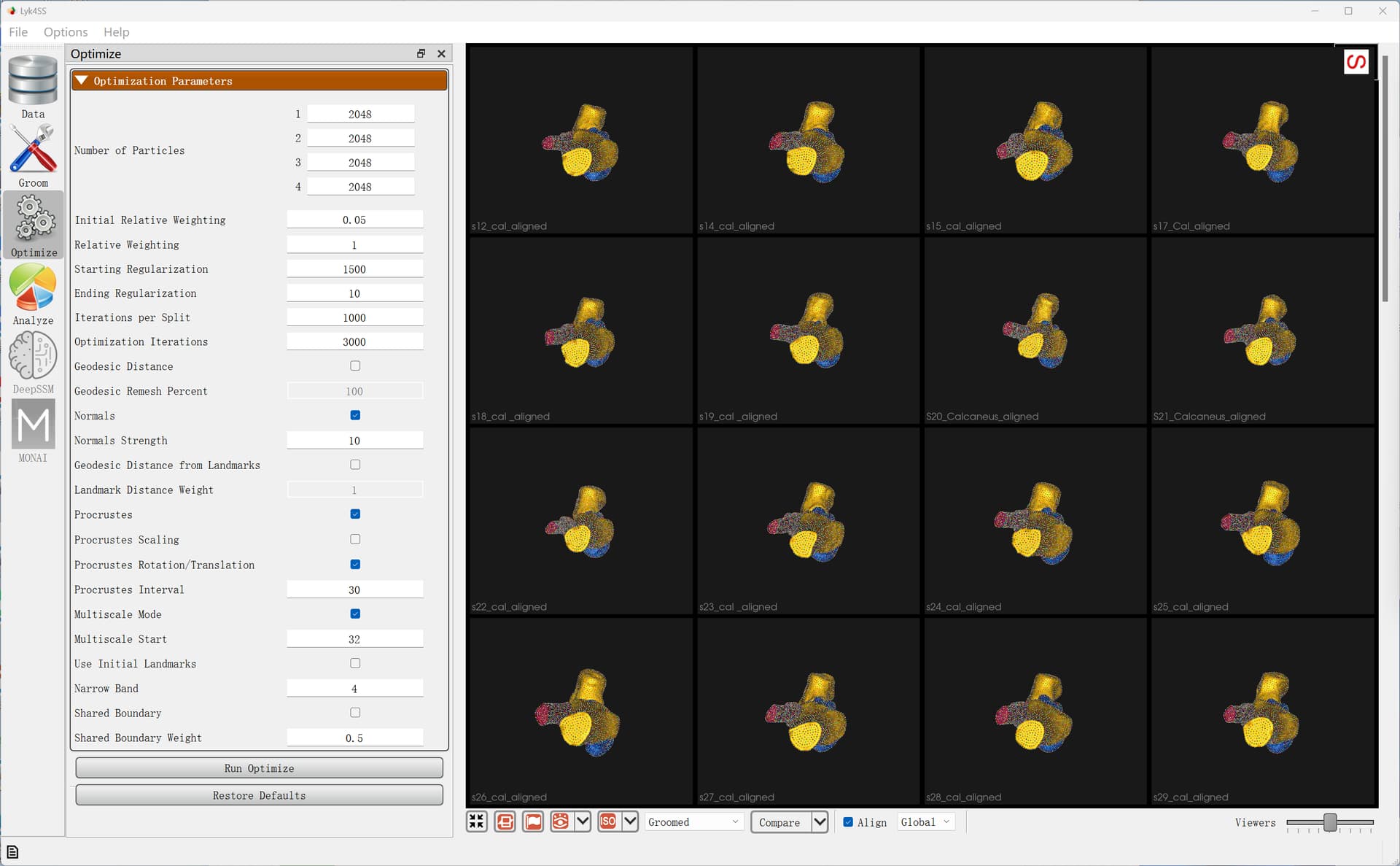
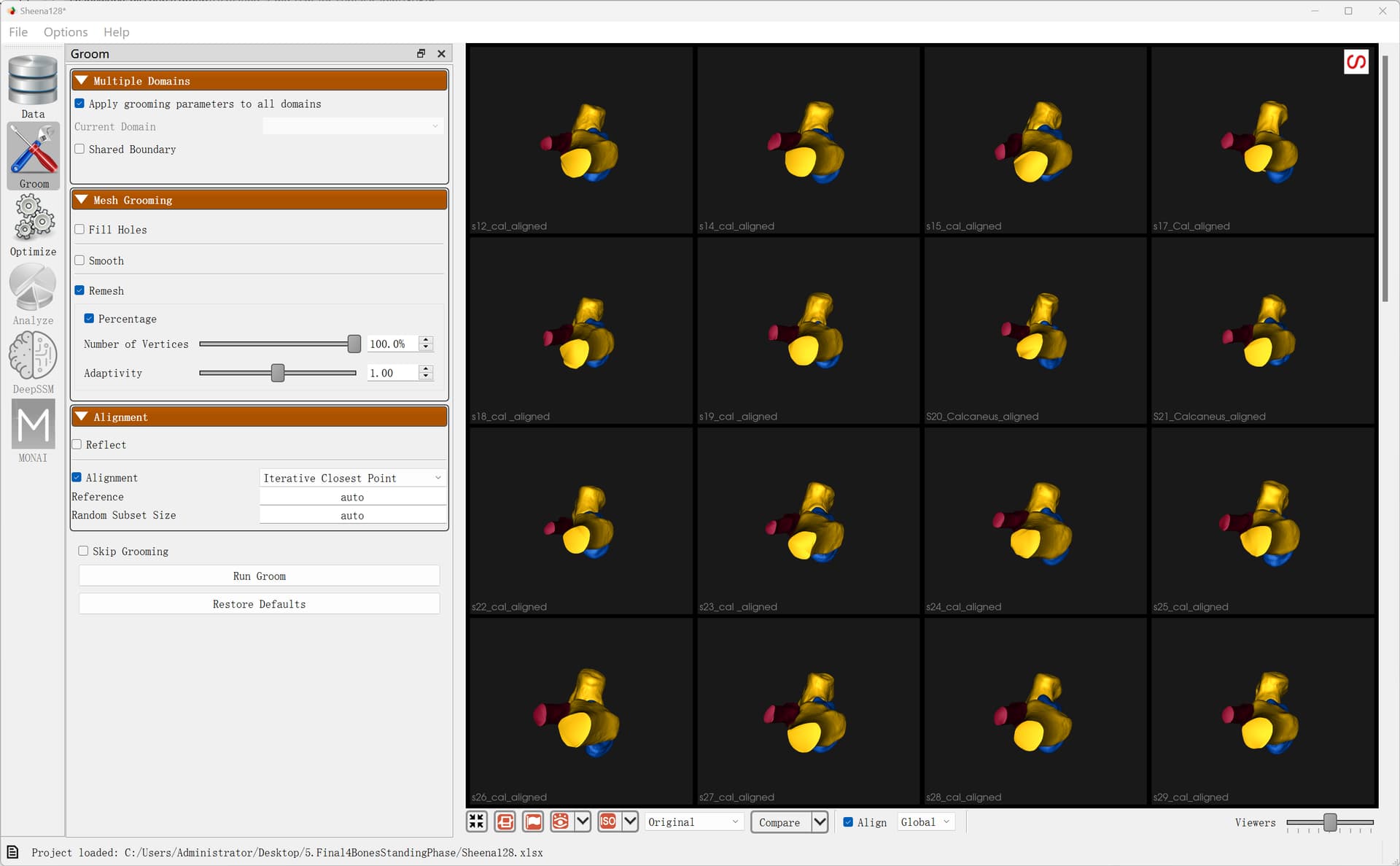
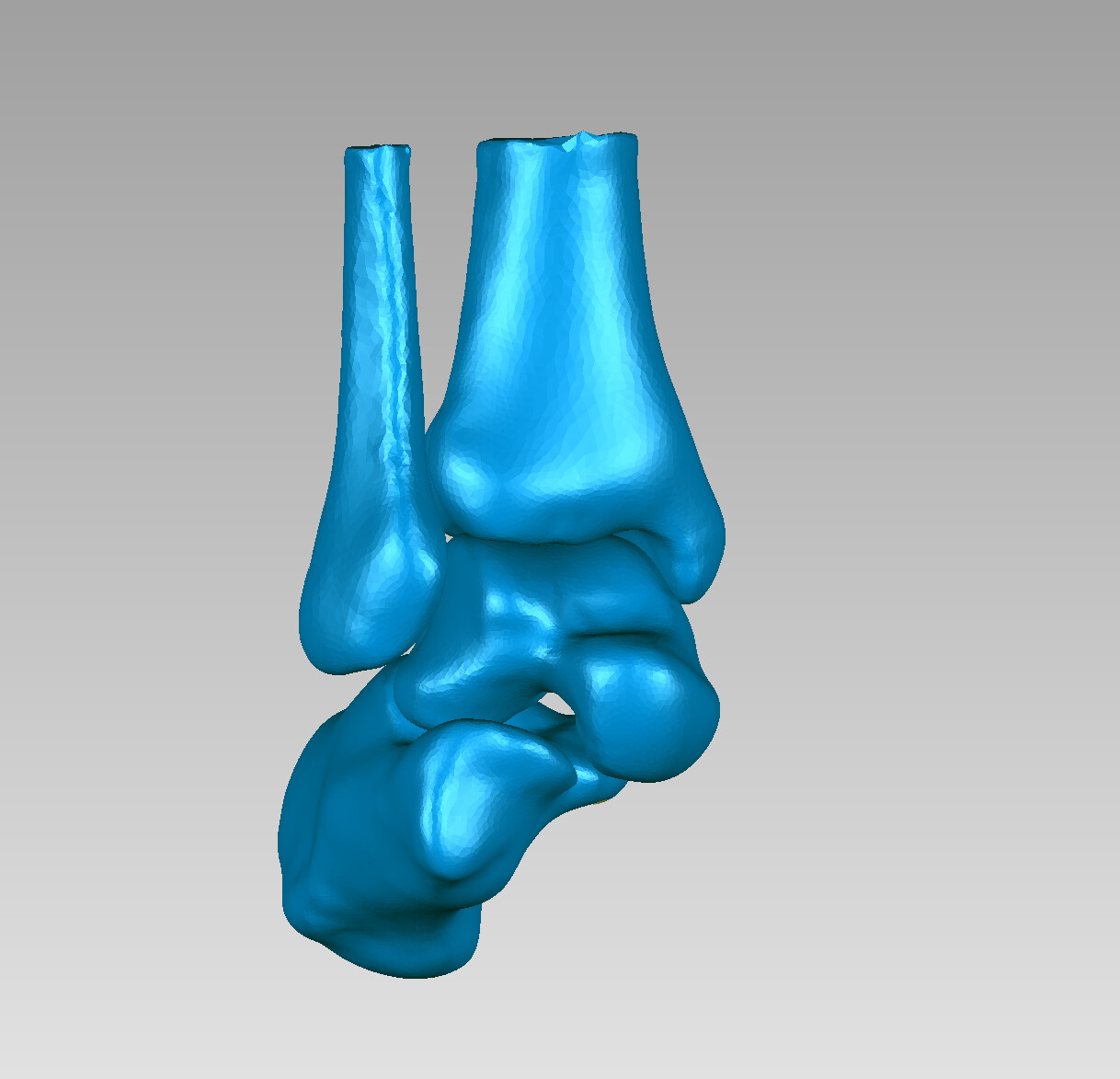
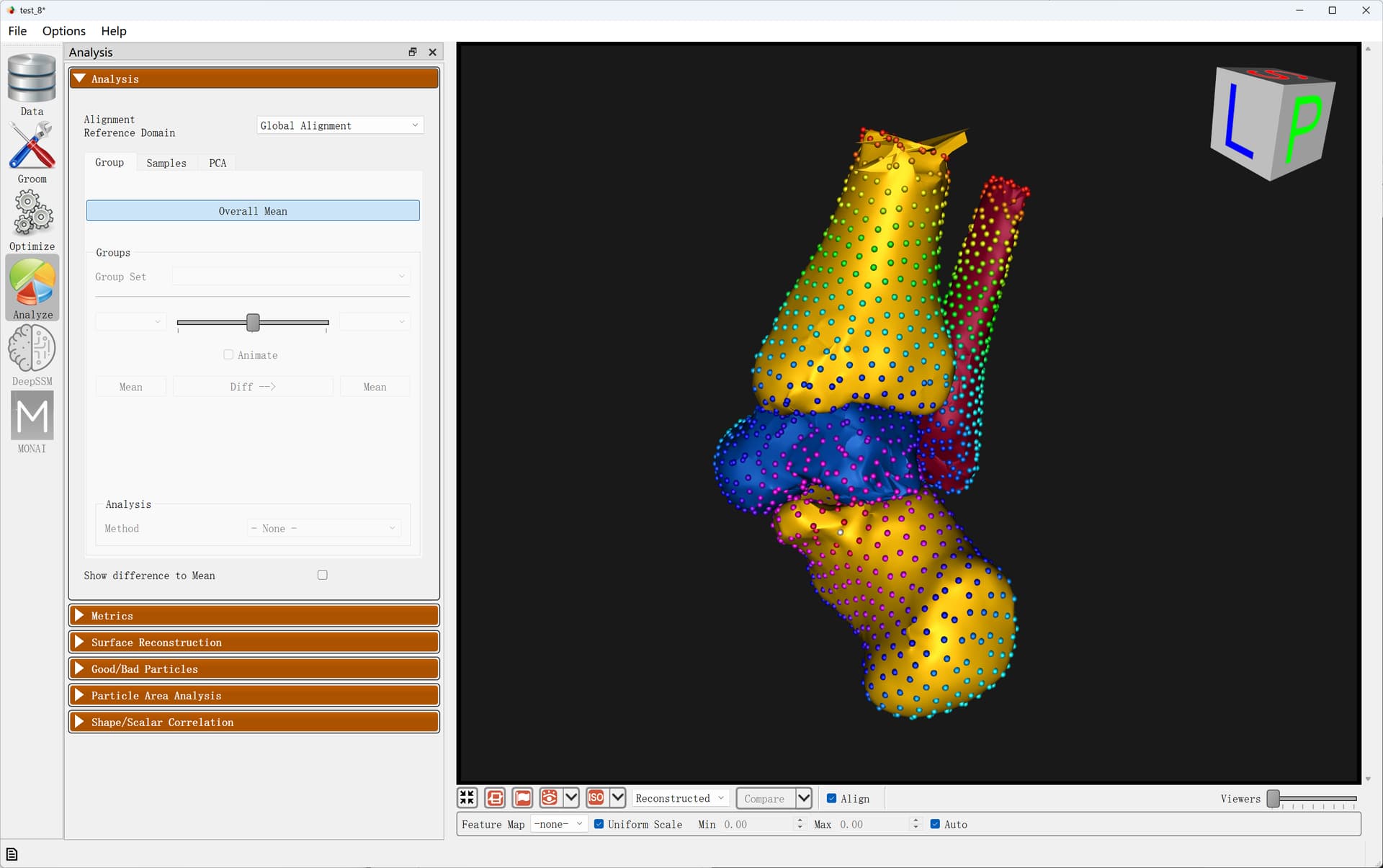
Hello, it’s been a long time since we last communicated. I recently completed the MD-SSM for the four bones of the foot (the distal tibia, the distal fibula, the talus, and the calcaneus). However, the results didn’t look very good.
I noticed that the distribution of the points was relatively even. I’m feeling a bit confused right now. Could you please tell me how I should make the correction?
I noticed that you replied under other people’s posts, suggesting to reduce the point setting and give it a try.
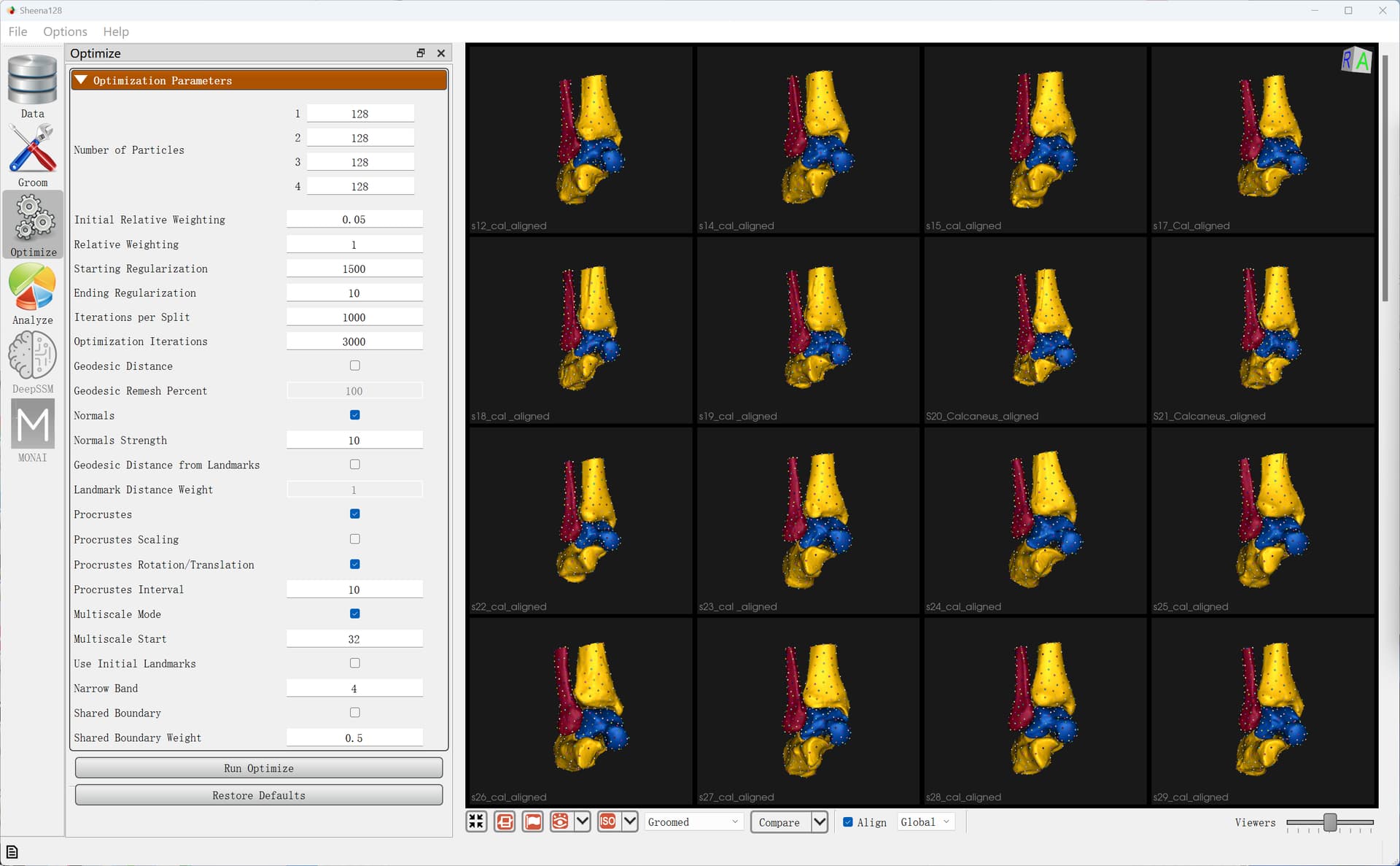
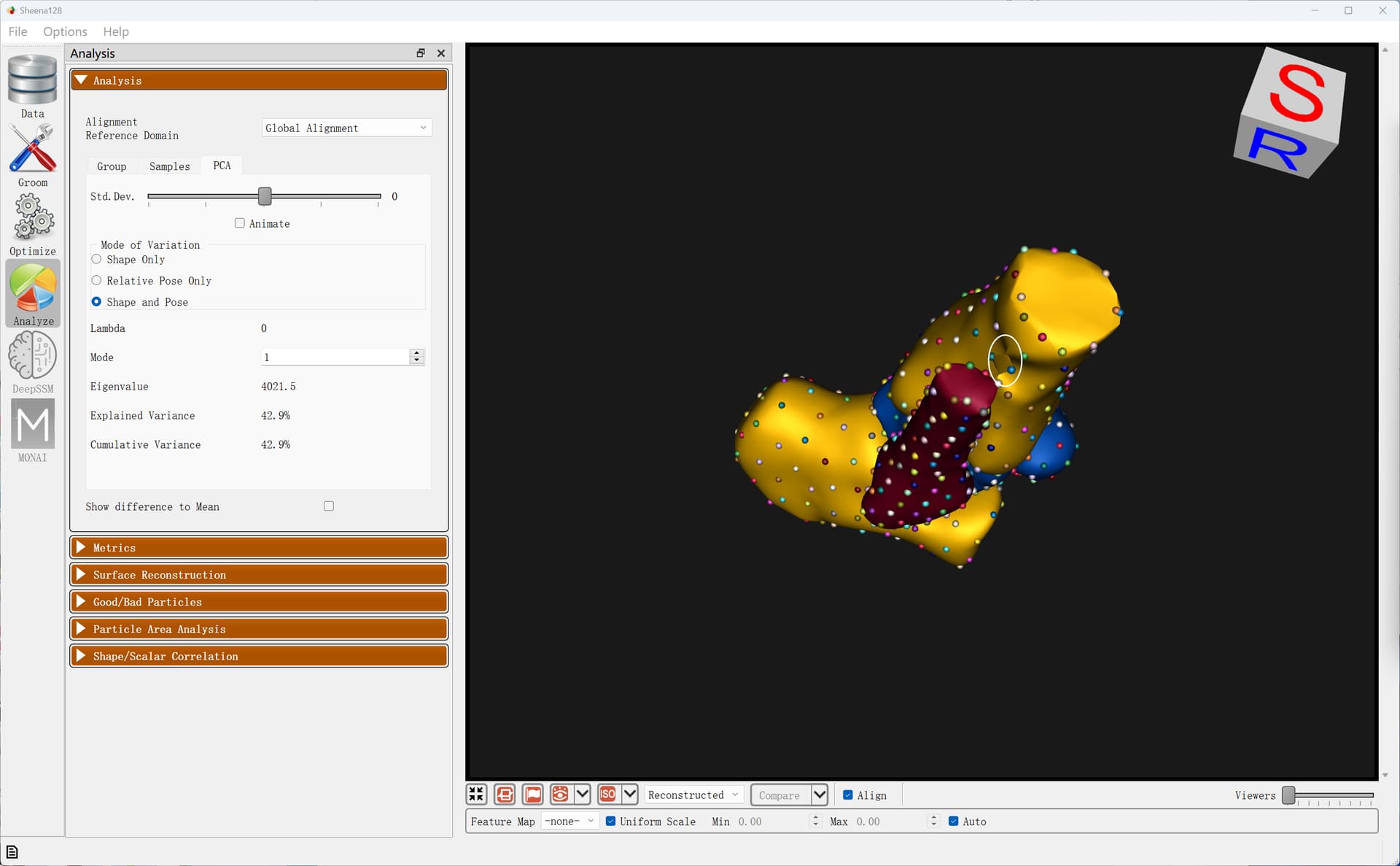
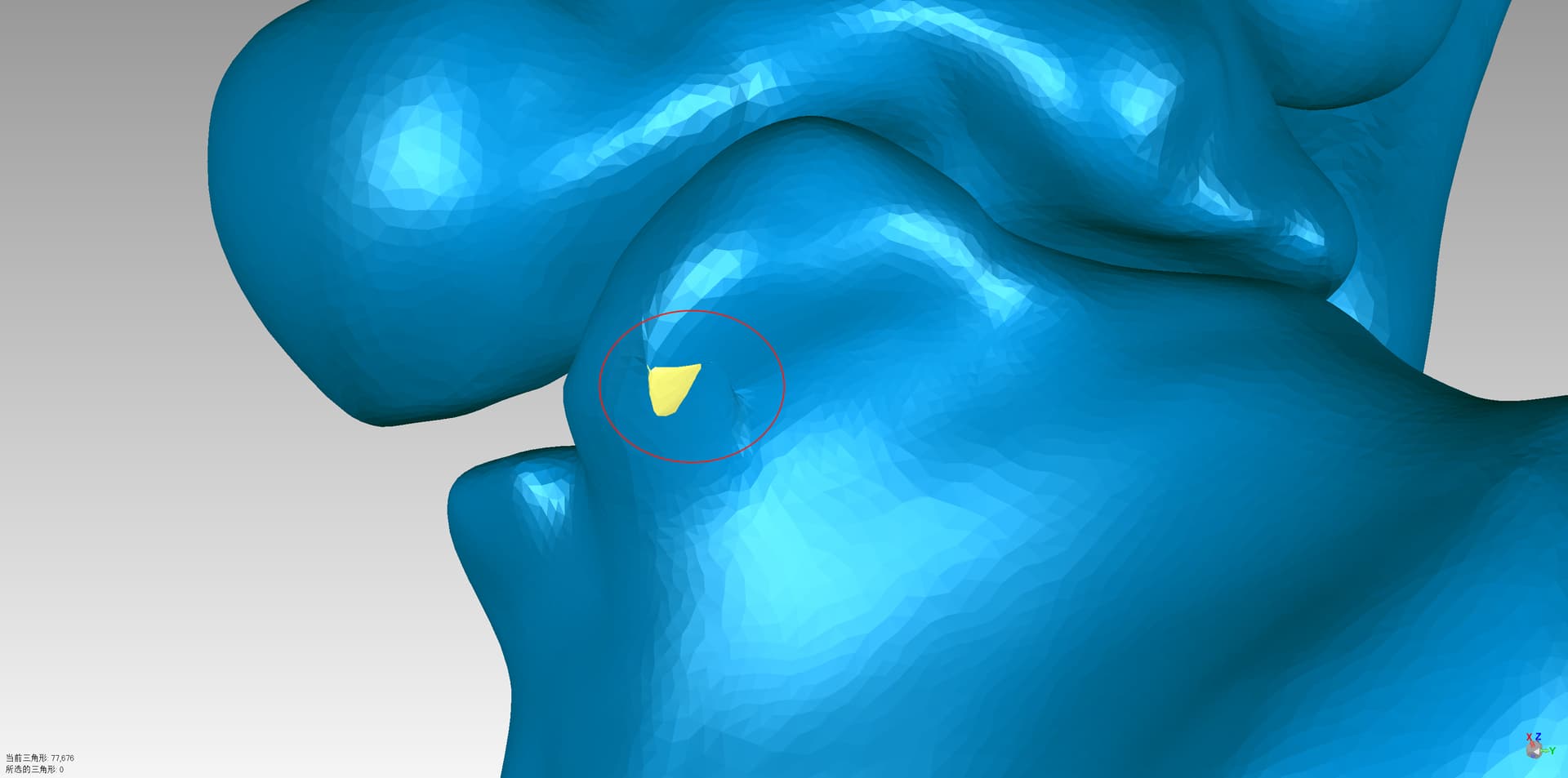
Keeping all other parameters unchanged, only changing “Number of Particles” to 128, the result is still acceptable (a crack appears on the inner side of the upper part of the tibia?), as follows:
However, there are still phenomena such as self-intersection, overlap, opposite directions of triangular facets, and some particles crossing (passing by) other particles during movement.
Could you please tell me how I should adjust the parameters?
I would suggest before looking at surface reconstructions to look at the correspondence particle configurations, since these are what are used to drive the surface reconstruction.
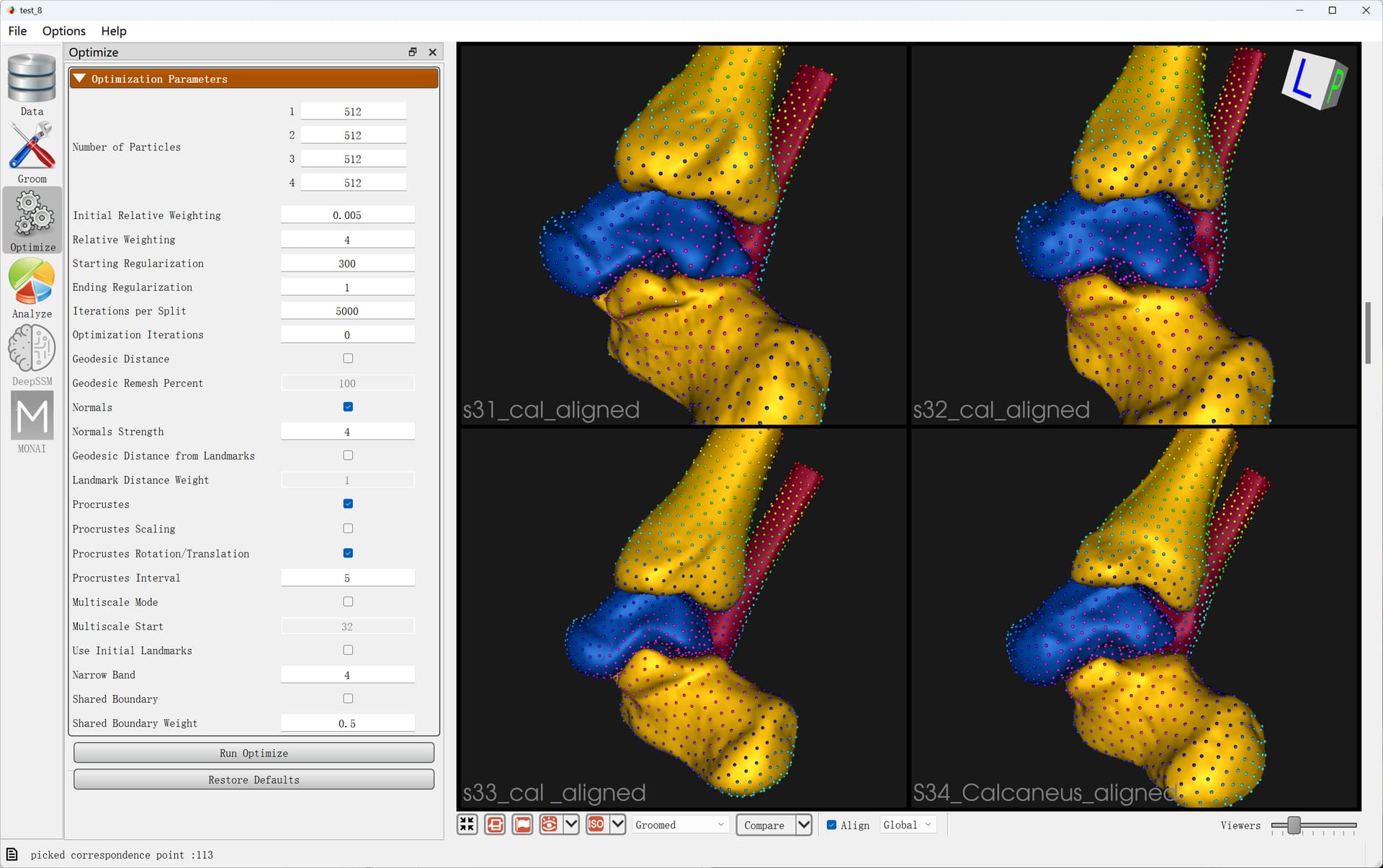
As for the parameters, I’m not sure I would recommend multi-scale mode and would start with a lower number of optimization iterations. If the particles are not in good correspondence when the optimization phase starts, it’s difficult for the optimization to fix all of them. I would be interested to see the particle configuration at the start of the optimization phase (e.g. 0 optimization iterations).
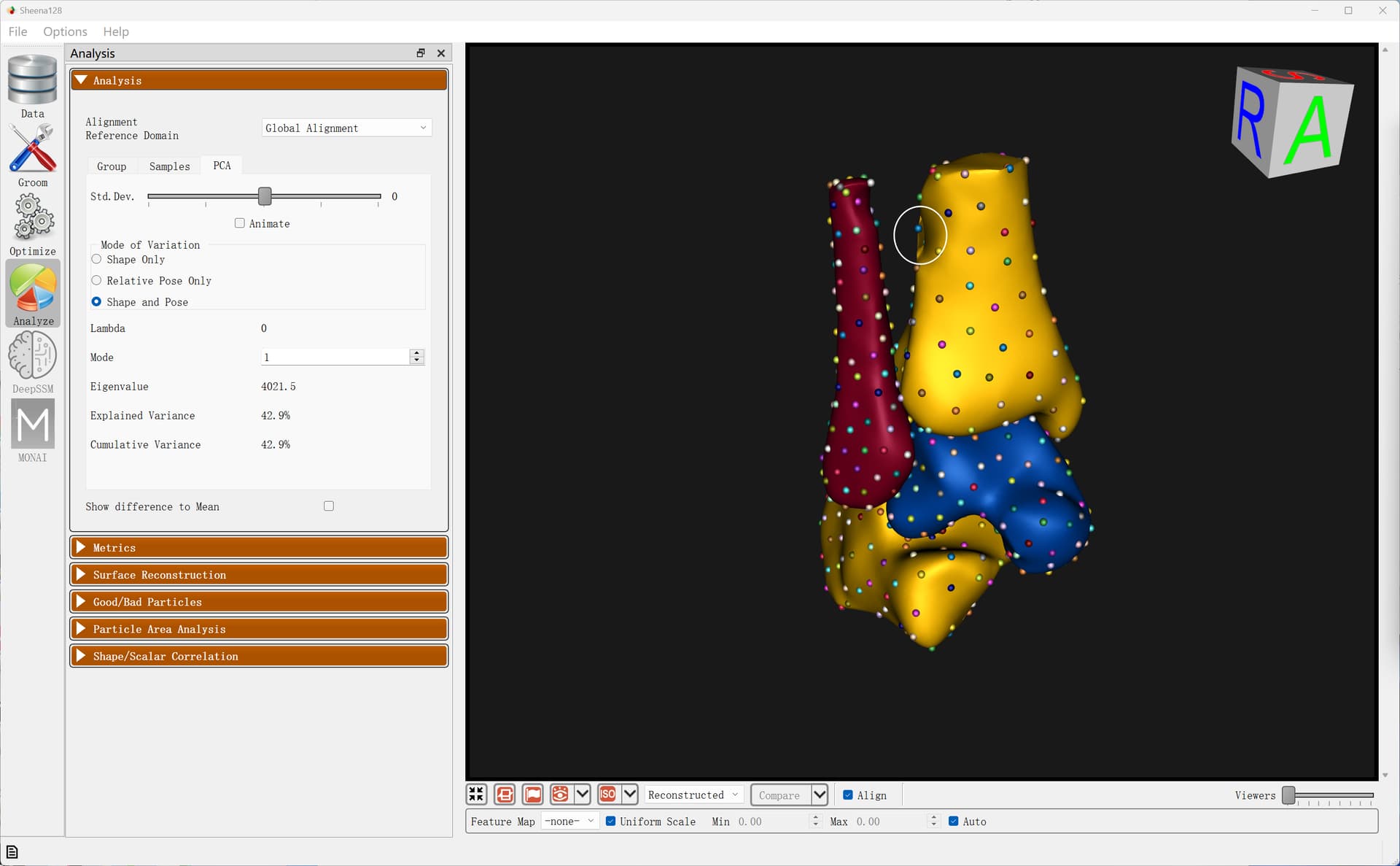
I observed that: In the areas where the particles were previously set, there were often wrinkles and self-intersections. The particle distribution was not particularly good (for the same particle, in the same bone of different subjects, the particle correspondence was not particularly accurate. For example: the point on the Groove for Tendo of Flexor Hallucis Longus of calcaneus in the figure, there was an offset on the calcaneus of different people).